What Is a Precast Duct Bank and How Does It Work?
In today’s construction world, engineers and builders need safe and strong systems to carry electrical cables underground. Best solutions for this purpose is a precast duct bank. It helps protect cables, keeps them organized, and ensures that electrical systems work properly for many years.
In this blog, you will learn everything about precast duct banks in simple and easy English. We will explain what they are, how they work, their parts, benefits, installation steps, and where people use them.
What Is a Precast Duct Bank?
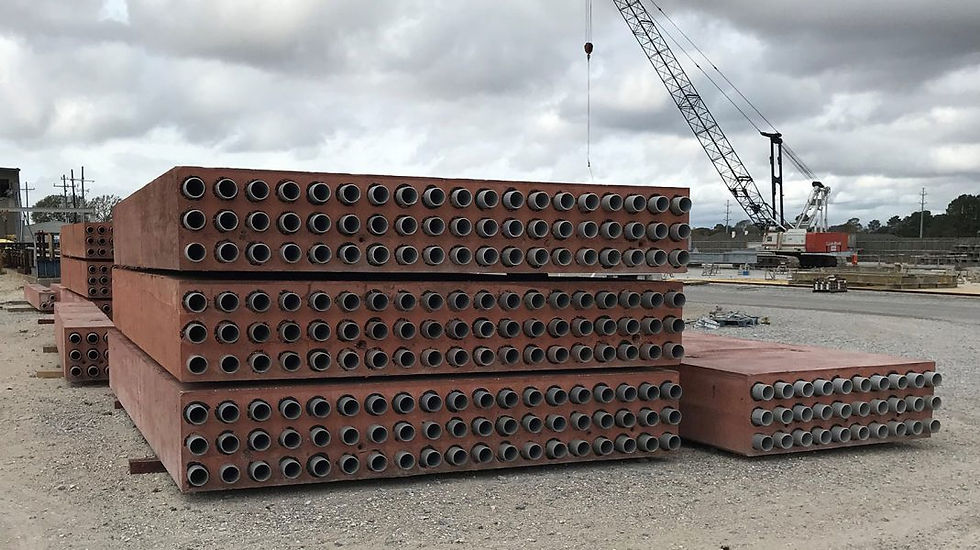
A precast duct bank is a group of pipes (called conduits) that workers place inside a concrete structure to carry electrical cables underground. The word “precast” means that workers make the concrete structure in a factory before they bring it to the construction site.
Workers do not build this system on-site from scratch. Instead, they deliver ready-made sections and install them quickly. This method saves time and improves quality.
In simple words, a precast duct bank is a ready-made concrete system that safely carries electrical wires underground.
Why Do We Need a Duct Bank?
Underground electrical cables face many risks. Soil pressure, water, heavy traffic, and temperature changes can damage them. Without proper protection, cables can fail, and repairs can become costly.
A duct bank solves these problems by:
Protecting cables from physical damage
Keeping cables organized
Reducing the risk of electrical failure
Making maintenance easier
Because of these benefits, engineers use duct banks in almost every major project.
Main Parts of a Precast Duct Bank
A precast duct bank includes several important components. Each part plays a key role in the system.
1. Conduits
Conduits are pipes that carry electrical cables. Workers usually make them from PVC or HDPE. These materials resist moisture and corrosion.
2. Precast Concrete
The concrete surrounds the conduits and gives them strong protection. Since workers make it in a factory, it has better quality and strength.
3. Spacers
Spacers keep the conduits at equal distances from each other. This spacing helps with heat control and proper alignment.
4. Steel Reinforcement (Rebar)
Workers place steel bars inside the concrete to increase strength. This reinforcement helps the duct bank handle heavy loads.
5. Pull Boxes and Manholes
These are access points. Workers use them to pull cables through conduits and inspect the system.
How Does a Precast Duct Bank Work?
A precast duct bank works as a safe pathway for electrical cables. It protects them and keeps them in order.
Let’s understand how it works step by step:
Step 1: Cable Placement
Workers insert electrical cables inside the conduits. Each conduit carries one or more cables depending on the design.
[Step 2: Protection from Damage
The concrete around the conduits protects cables from soil pressure, water, and heavy loads like vehicles.
Step 3: Heat Control
Electrical cables produce heat when electricity flows through them. The spacing between conduits allows heat to escape, which prevents overheating.
Step 4: Easy Access
Pull boxes and manholes allow workers to check cables, fix problems, or add new cables in the future.
Step 5: Long-Term Use
Because of strong materials and proper design, the system works efficiently for many years without major issues.
Benefits of Precast Duct Banks
Precast duct banks offer many advantages over traditional systems.
1. Fast Installation
Workers install precast units quickly because they are already made. This reduces project time.
2. High Quality
Factories produce precast units under controlled conditions. This ensures consistent quality and strength.
3. Less Labor Work
Workers do not need to mix concrete or build forms on-site. This reduces labor effort.
4. Strong and Durable
Precast concrete is very strong. It can handle heavy loads and harsh weather conditions.
5. Cost Savings
Although the initial cost may be higher, it saves money over time by reducing maintenance and labor costs.
6. Better Safety
Precast systems reduce construction risks and improve worker safety.
Installation Process of a Precast Duct Bank
The installation process is simple but requires proper planning and skilled workers.
1. Site Preparation
Workers clear the area and dig a trench according to the design.
2. Base Preparation
They prepare a flat base using sand or gravel. This base supports the duct bank.
3. Placing Precast Sections
Workers place the precast duct bank sections into the trench using cranes or lifting machines.
4. Aligning and Connecting
They align the sections carefully and connect them to form a continuous system.
5. Cable Pulling
Workers pull electrical cables through the conduits.
6. Backfilling
They fill the trench with soil and compact it properly.
7. Final Inspection
Engineers check the system to ensure everything is correct and safe.
Where Do People Use Precast Duct Banks?
Precast duct banks are very common in different types of projects.
1. Commercial Projects
Offices, shopping malls, and business buildings use duct banks to manage electrical systems.
2. Industrial Areas
Factories and plants need strong systems for heavy electrical loads.
3. Power Distribution
Utility companies use duct banks to supply electricity across cities.
4. Airports and Railways
These places need reliable underground systems for operations and safety.
5. Data Centers
Duct banks help manage large numbers of power and communication cables.
Precast vs Traditional Duct Banks
Let’s compare precast duct banks with cast-in-place duct banks.
Precast Duct Bank
Workers make it in a factory
Installation is fast
Quality is consistent
Requires less labor
Cast-In-Place Duct Bank
Workers build it on-site
Takes more time
Quality depends on workers
Requires more labor
Most modern projects prefer precast duct banks because they save time and provide better results.
Important Design Factors
Engineers must consider several factors when designing a precast duct bank.
Number of conduits
Size of conduits
Type of cables
Soil condition
Drainage system
Future expansion needs
Good design ensures that the system works safely and efficiently.
Maintenance of Precast Duct Banks
Precast duct banks require very little maintenance, but regular checks are still important.
Workers should:
Inspect pull boxes and manholes
Check for water inside the system
Ensure cables are in good condition
Look for any structural damage
Regular maintenance helps avoid major problems.
Common Problems and Solutions
Even strong systems can face issues if workers do not install or design them properly.
Problem 1: Water Leakage
Solution: Use proper sealing and drainage systems.
Problem 2: Cable Overheating
Solution: Maintain proper spacing between conduits.
Problem 3: Poor Alignment
Solution: Carefully place and connect sections during installation.
Problem 4: Damage During Installation
Solution: Use trained workers and proper equipment.
Future of Precast Duct Banks
As cities grow and technology improves, the demand for precast duct banks continues to increase.
In the future, we may see:
Eco-friendly concrete materials
Smarter monitoring systems
Better designs for energy efficiency
Faster installation methods
These improvements will make duct banks even more reliable and sustainable.
Conclusion
A precast duct bank is a strong and efficient solution for underground electrical systems. It protects cables, keeps them organized, and ensures long-term performance. Because workers manufacture it in a factory, it offers high quality and fast installation.
From commercial buildings to power distribution systems, precast duct banks play a key role in modern construction. When engineers design and install them properly, they provide safe and reliable service for many years.


Comments